What Do the Different Squash Ball Dots Mean?
Guides
Blue, red, single yellow or double yellow? Discover what squash ball dots mean and which bounce suits your playing level.
The quick answer
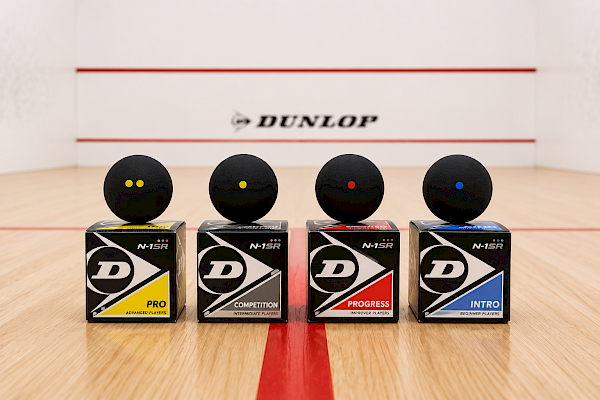
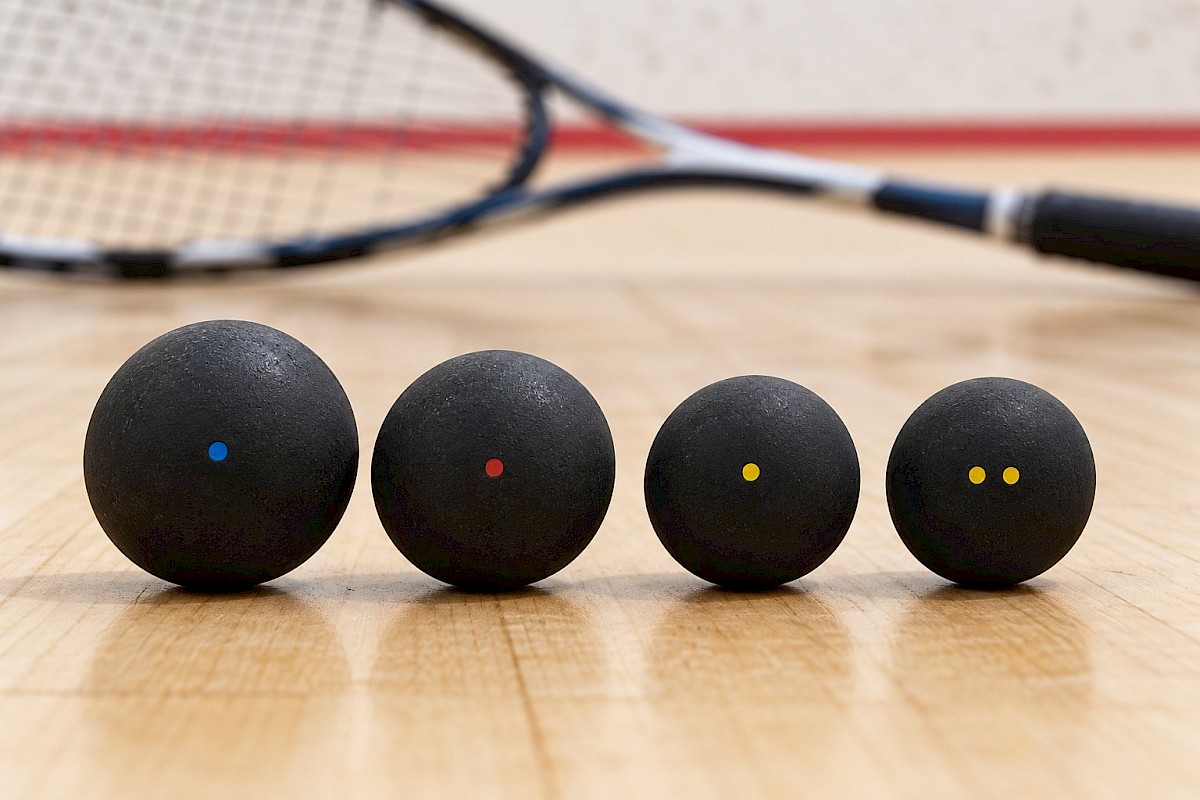
The coloured dots on squash balls indicate how lively or bouncy the ball is. In the familiar Dunlop range, blue is the bounciest beginner option, followed by red, single yellow and double yellow. Double yellow is the lowest-bouncing competition ball. A harder-to-play ball is not automatically the best choice for you.
Blue dot: for getting started
A blue-dot ball is larger and bouncier, helping new players enjoy longer rallies while they learn timing and movement. It is a sensible option for first-time players, some juniors and casual sessions.
Red dot: for developing players
Red-dot balls are less bouncy than blue but still more forgiving than yellow-dot options. They can be a useful step up as your rallies get longer and your technique improves.
Single yellow dot: for club players
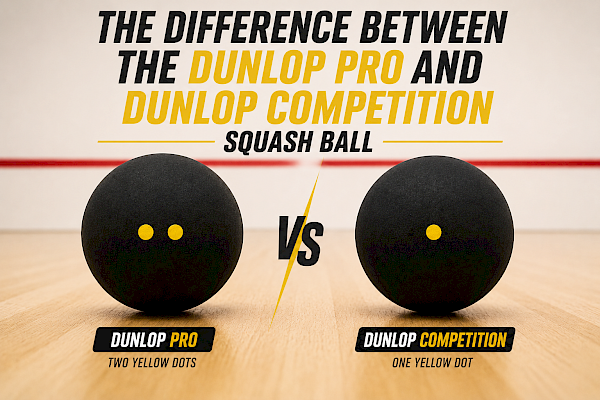
A single yellow dot offers a lower bounce and more demanding rallies. It is often a practical choice for regular players, especially when the court is cool or the ball is not being hit hard enough to stay warm.
Double yellow dot: for advanced play
Double yellow is the familiar competition standard. It needs sufficient warmth and sustained hitting to perform as intended. If the ball barely rebounds and rallies end immediately, switching to a livelier ball can make the session better.
Why does temperature matter?
Squash balls become more responsive as they warm up through hitting. Court temperature, rally intensity and player level all affect how a ball behaves. You do not need to prove anything by struggling with a double yellow dot on a cold court.
Which ball should you choose?
Choose the ball that allows consistent rallies and an enjoyable challenge. Beginners can start with blue or red, improving club players can consider single yellow, and advanced players can use double yellow when conditions suit. Two Dots prints designs on selected squash balls, so check the product options and intended use before ordering.
Frequently asked questions
Is double yellow the hardest squash ball?
In the standard four-dot progression, double yellow is the lowest-bouncing and most demanding.
Can beginners use a double yellow ball?
They can, but a blue or red dot usually makes learning and rallying easier.
Does the dot colour change the rules?
No. It changes the ball characteristics, not the scoring or serving rules.
Compare the available personalised Dunlop Intro, Dunlop Progress, Dunlop Competition and Dunlop Pro options before choosing a gift or club prize. For care advice, read how long a squash ball lasts; new players can also start with our squash rules for beginners.
Ball-selection guidance checked against England Squash’s guide to choosing a ball.